
MY BLOG POST
Testosterone Enanthate vs Cypionate: Differences, Uses, Risks & Safety
Dec
Introduction
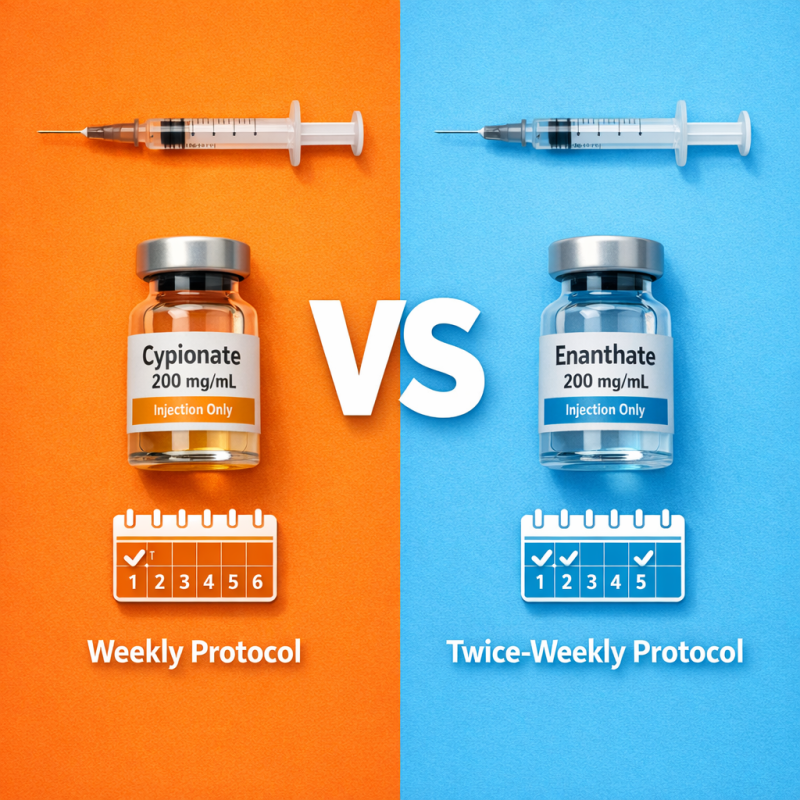
Testosterone enanthate vs cypionate is a common comparison for people researching testosterone therapy and different testosterone formulations. Both are injectable forms of testosterone used in medical settings, but they have differences in their chemical ester, prescribing practices, availability, and how they are administered. Understanding those differences can help readers have a more informed discussion with a qualified healthcare professional.
What Are Testosterone Enanthate and Testosterone Cypionate?
Testosterone enanthate and testosterone cypionate are both testosterone esters. An ester is attached to the testosterone molecule to influence how the hormone is released after administration.
Once administered, the ester is gradually removed and testosterone becomes available to the body.
Both medications are designed to provide testosterone over an extended period compared with unesterified testosterone. However, the specific product, formulation, prescribing information, and treatment schedule can differ.
Neither medication should be viewed simply as a bodybuilding product. Testosterone therapy is a medical treatment that should be considered only when clinically appropriate.
Testosterone Enanthate vs Cypionate: What Is the Main Difference?
The primary difference is the ester attached to the testosterone molecule.
Testosterone enanthate contains the enanthate ester, while testosterone cypionate contains the cypionate ester.
Both are relatively long-acting testosterone preparations, meaning they do not behave like very short-acting testosterone formulations.
For patients receiving medically supervised testosterone treatment, the practical differences can include product availability, individual response, prescribing preferences, formulation characteristics, and the specific instructions provided with the medication.
The differences are generally less dramatic than online discussions sometimes suggest.
Testosterone Enanthate
Testosterone enanthate is an injectable testosterone formulation used in medical treatment for certain forms of testosterone deficiency.
It has been prescribed for patients who have appropriately diagnosed conditions involving inadequate testosterone production.
Like other testosterone medicines, treatment requires consideration of the underlying cause of low testosterone rather than simply treating a laboratory result.
A healthcare professional may evaluate symptoms, medical history, physical findings, and laboratory measurements before deciding whether treatment is appropriate.
Testosterone Cypionate
Testosterone cypionate is another injectable testosterone formulation used in the treatment of testosterone deficiency when medically indicated.
It is commonly discussed alongside testosterone enanthate because both are injectable esterified forms of testosterone.
The medication is available in specific pharmaceutical formulations with prescribing information covering indications, warnings, precautions, and monitoring.
As with testosterone enanthate, treatment should be individualized according to the patient’s diagnosis and clinical circumstances.
How Long Do They Last?
Both testosterone enanthate and testosterone cypionate are designed to release testosterone gradually.
However, it is not accurate to assume that everyone will experience exactly the same duration or blood-level pattern.
Factors that can influence testosterone concentrations include:
- Individual metabolism
- Dose prescribed by the clinician
- Injection interval
- Body composition
- Absorption
- Other medications
- Underlying medical conditions
- Laboratory timing
This is why treatment schedules should follow the prescribing information and healthcare provider’s instructions rather than schedules found on bodybuilding websites.
Testosterone Enanthate vs Cypionate: Are They the Same?
They are similar but not chemically identical.
Both ultimately provide testosterone to the body, but their ester structures differ.
Because the testosterone molecule itself is the active hormone, the two formulations can have broadly similar therapeutic purposes when appropriately prescribed.
The choice between them may depend on the available pharmaceutical product, clinician preference, patient circumstances, and response to treatment.
Testosterone Replacement Therapy
Testosterone therapy may be considered when a person has symptoms and signs consistent with testosterone deficiency together with consistently low testosterone measurements.
A diagnosis should not normally be based on a single low test result.
Medical guidelines emphasize appropriate evaluation and repeat testing when needed. Clinicians may also investigate why testosterone levels are low before deciding whether replacement therapy is appropriate.
Possible causes can involve disorders affecting the testes, pituitary gland, hypothalamus, certain medications, obesity, chronic illnesses, or other medical factors.
Potential Benefits of Medically Appropriate Testosterone Therapy
When testosterone deficiency is properly diagnosed, treatment may help improve symptoms associated with inadequate testosterone levels.
Depending on the individual, potential benefits may include improvements in:
- Sexual function
- Libido
- Energy
- Mood
- Muscle mass
- Bone health
- Red blood cell production
The response varies between individuals, and testosterone therapy is not intended simply to enhance normal testosterone levels beyond the medically appropriate range.
Side Effects of Testosterone Enanthate and Cypionate
Because both products provide testosterone, they can share many potential adverse effects.
Possible effects include:
- Increased red blood cell production
- Acne and oily skin
- Changes in cholesterol
- Fluid retention
- Breast enlargement
- Reduced sperm production
- Infertility
- Testicular shrinkage
- Changes in mood
- Worsening of certain prostate-related symptoms
- Increased blood pressure
Some people may experience no significant adverse effects, while others require changes to treatment or additional monitoring.
Testosterone Therapy and Fertility
One of the most important considerations is fertility.
External testosterone can suppress the body’s natural reproductive hormone signaling. This can reduce sperm production and may significantly affect fertility.
Someone who is planning to have children should discuss this with a healthcare professional before starting testosterone therapy.
Testosterone replacement should therefore not automatically be considered an appropriate treatment for someone whose primary goal is to improve fertility.
Testosterone and Hematocrit
Testosterone can stimulate red blood cell production.
For some patients, this can cause hematocrit to rise above the desired range. Excessively elevated hematocrit can increase health concerns and may require medical assessment.
Healthcare providers may therefore monitor blood counts during testosterone treatment.
This is an important reason why prescribed testosterone should not be treated as a simple cosmetic or performance-enhancing product.
Testosterone and Cardiovascular Health
Cardiovascular health should also be considered.
Testosterone therapy can affect factors such as red blood cell levels, fluid balance, blood pressure, and cholesterol.
The overall cardiovascular effects of testosterone therapy are complex and depend on the patient’s health, treatment indication, formulation, and monitoring.
People with cardiovascular disease or significant cardiovascular risk factors should discuss those issues with their healthcare provider before treatment.
Testosterone and Prostate Health
Testosterone treatment can affect prostate-related symptoms and requires appropriate clinical consideration.
A provider may assess prostate health before and during treatment depending on the patient’s age, symptoms, medical history, and risk profile.
New urinary symptoms, blood in the urine, or other concerning changes should be medically evaluated rather than automatically attributed to testosterone therapy.
Testosterone Enanthate vs Cypionate for Bodybuilding
Online searches often compare these medications in the context of bodybuilding.
However, medically prescribed testosterone and non-medical anabolic steroid use are not the same thing.
Using testosterone for physique enhancement can expose a person to hormonal suppression and other health risks without a medical indication.
This article does not provide bodybuilding cycles, stacking plans, injection schedules, or instructions for non-medical use.
Testosterone Enanthate vs Cypionate: Which Is Better?
There is no universal answer.
For someone with confirmed testosterone deficiency who is medically eligible for treatment, the more appropriate formulation depends on factors such as:
- Clinical diagnosis
- Available pharmaceutical products
- Treatment goals
- Individual response
- Adverse effects
- Convenience
- Provider recommendations
- Monitoring results
One formulation is not automatically “stronger” or “better” for every patient.
A healthcare professional can determine which formulation is appropriate based on the patient’s circumstances.
What Should Be Monitored During Testosterone Therapy?
Monitoring is an important part of responsible testosterone treatment.
Depending on the patient, clinicians may monitor:
- Testosterone concentrations
- Complete blood count or hematocrit
- Blood pressure
- Symptoms and treatment response
- Prostate-related health where appropriate
- Cardiovascular risk factors
- Fertility considerations
The exact monitoring schedule depends on the medication and the individual’s clinical situation.
Why Laboratory Testing Matters
Symptoms alone cannot determine whether testosterone treatment is working appropriately.
Laboratory results help healthcare professionals determine whether testosterone concentrations are appropriate and whether treatment is causing potentially important changes elsewhere in the body.
Red Flags When Buying Testosterone Online
People searching for testosterone products online should be cautious about websites making medical or performance claims without appropriate safeguards.
Potential warning signs include:
- Claims that testosterone is completely risk-free
- Unclear ingredient information
- No reliable manufacturer information
- Unrealistic promises about muscle growth
- Products marketed for unsupervised human use
- Pressure to purchase without medical evaluation
- Claims that laboratory testing is unnecessary
- Advice encouraging users to ignore medical monitoring
A legitimate medical treatment requires more than simply obtaining a vial of testosterone.
Frequently Asked Questions
What is the difference between testosterone enanthate and cypionate?
The main chemical difference is the ester attached to the testosterone molecule. Both are long-acting injectable testosterone formulations used medically in appropriate circumstances.
Is testosterone enanthate stronger than cypionate?
Neither should simply be described as universally stronger. Both deliver testosterone, and the appropriate formulation depends on the patient’s diagnosis, formulation, prescribing instructions, and individual response.
Can testosterone enanthate and cypionate be used for TRT?
Both may be used in testosterone therapy when medically appropriate, depending on the specific product and jurisdiction. Treatment should follow professional diagnosis and prescribing guidance.
Which lasts longer, testosterone enanthate or cypionate?
Both are relatively long-acting testosterone esters. Individual blood levels and duration can vary, so treatment intervals should be determined according to the prescribed product and clinical monitoring.
Can testosterone therapy affect fertility?
Yes. External testosterone can suppress sperm production and reduce fertility.
Do testosterone injections require blood tests?
Medical testosterone therapy generally involves laboratory evaluation before and during treatment. The exact tests and monitoring schedule depend on the patient’s circumstances.
Are testosterone enanthate and cypionate anabolic steroids?
They are testosterone-based anabolic-androgenic steroid medicines. Their medical use is different from non-medical anabolic steroid use for bodybuilding.
Final Thoughts on Testosterone Enanthate vs Cypionate
The testosterone enanthate vs cypionate comparison is mainly a comparison between two esterified testosterone formulations. Both can provide testosterone over an extended period, but their chemical esters, formulations, availability, and individual treatment considerations differ.
For people with suspected testosterone deficiency, the most important step is not choosing an ester based on online opinions. Instead, appropriate diagnosis, investigation of the underlying cause, professional prescribing, and ongoing monitoring should guide treatment.
Testosterone therapy can be useful when medically indicated, but it also carries potential risks involving fertility, blood counts, cardiovascular health, blood pressure, and prostate-related concerns.
testosterone enanthate,
test e,
test enanthate,
test e vs test c,
testosterone e,
testosterone enanthate vs cypionate,
cypionate vs enanthate,
enanthate.
testosterone cypionate half life,
testosterone cypionate vs enanthate,
test c,
test c vs test e,
test cypionate vs enanthate,
types of testosterone,
enanthate vs cypionate.
