
MY BLOG POST
Cypionate vs Enanthate: Differences, Uses, Risks & Safety
Aug
Introduction
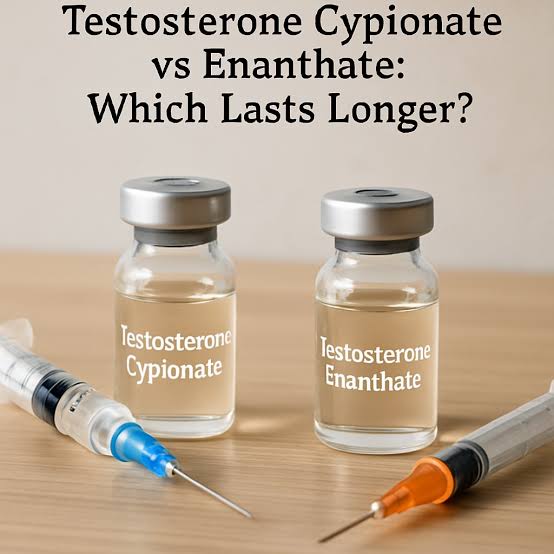
Cypionate vs enanthate is a common search when people are researching injectable testosterone formulations. Testosterone cypionate and testosterone enanthate are both esterified forms of testosterone used in medical treatment for appropriate patients with testosterone deficiency. Although they have similar therapeutic purposes, their chemical structures, formulations, availability, and individual treatment considerations can differ.
What Are Testosterone Cypionate and Enanthate?
Testosterone cypionate and testosterone enanthate are testosterone esters. The ester changes how testosterone is released and metabolized after administration.
The underlying hormone is testosterone, but the attached ester differs:
- Testosterone cypionate contains the cypionate ester.
- Testosterone enanthate contains the enanthate ester.
Both are relatively long-acting injectable testosterone formulations.
The practical differences between them are often less significant than online discussions suggest. The choice of formulation should depend on medical needs, the specific pharmaceutical product, availability, and professional guidance.
Cypionate vs Enanthate: The Main Difference
The most obvious difference is their ester structure.
Cypionate and enanthate have slightly different molecular weights and pharmacokinetic characteristics. However, both ultimately provide testosterone to the body.
For someone receiving medically supervised testosterone treatment, factors such as treatment response, blood-test results, product availability, and tolerability can be more important than theoretical differences between the esters.
A healthcare professional should determine which formulation is appropriate for an individual patient.
Testosterone Cypionate Explained
Testosterone cypionate is an injectable testosterone medication used in appropriate cases of testosterone deficiency.
It is supplied as a specific pharmaceutical formulation with prescribing information covering indications, contraindications, warnings, precautions, and monitoring.
Treatment should begin with an appropriate diagnosis rather than simply a desire to increase testosterone.
A healthcare professional may assess symptoms, medical history, physical findings, and laboratory results before determining whether testosterone therapy is appropriate.
Testosterone Enanthate Explained
Testosterone enanthate is another esterified testosterone formulation used medically for testosterone replacement in appropriate patients.
Like cypionate, it gradually releases testosterone after administration.
Its availability and approved indications can vary between countries and individual pharmaceutical products.
Patients should therefore follow the prescribing information for their specific medication rather than assuming that all testosterone enanthate products are interchangeable.
Are Cypionate and Enanthate the Same?
They are similar but not identical.
Both contain testosterone attached to a different ester. Once the ester is metabolized, testosterone becomes available to the body.
This means that the two medications can have similar therapeutic objectives while still differing in pharmacokinetic characteristics and product formulations.
The distinction is important, but it does not mean that one formulation is universally superior.
How Long Do Cypionate and Enanthate Last?
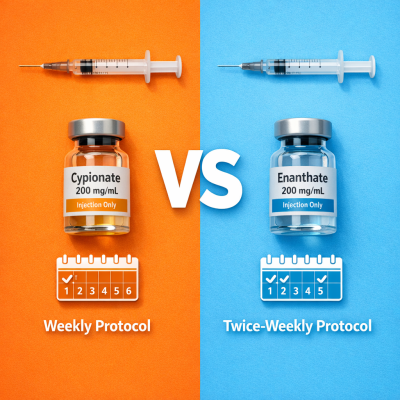
Both formulations are considered longer-acting testosterone preparations compared with short-acting testosterone formulations.
However, there is no single duration that applies identically to every person.
Testosterone concentrations can be affected by:
- Individual metabolism
- The prescribed formulation
- Injection interval
- Absorption
- Body composition
- Other medications
- Underlying health conditions
- Timing of laboratory testing
Because of these variables, patients should not change their treatment interval based on information found on bodybuilding forums or social media.
Cypionate vs Enanthate for Testosterone Replacement Therapy
Testosterone replacement therapy may be considered when a patient has symptoms and signs consistent with testosterone deficiency together with consistently low testosterone concentrations.
Medical guidelines recommend appropriate diagnostic evaluation rather than treating based on symptoms alone.
Depending on the circumstances, clinicians may repeat early-morning testosterone testing and investigate potential causes of low testosterone.
The choice between cypionate and enanthate can then be considered within the broader treatment plan.
Potential Benefits of Testosterone Therapy
When testosterone deficiency has been appropriately diagnosed, treatment may improve some symptoms associated with low testosterone.
Potential improvements can include:
- Sexual function
- Libido
- Energy
- Mood
- Muscle mass
- Bone health
- Anemia related to testosterone deficiency
The degree of improvement varies between patients.
Testosterone therapy is intended to restore testosterone to an appropriate physiological range when medically indicated, rather than provide excessive hormone levels for performance enhancement.
Cypionate vs Enanthate Side Effects
Because both medications provide testosterone, they can produce similar potential adverse effects.
Possible effects include:
- Increased red blood cell production
- Acne
- Oily skin
- Fluid retention
- Changes in cholesterol
- Increased blood pressure
- Reduced sperm production
- Infertility
- Testicular shrinkage
- Breast enlargement
- Mood changes
- Changes in prostate-related symptoms
Not every patient will experience these effects, and the significance of any adverse effect depends on the individual.
Medical monitoring helps identify problems before they become more serious.
Testosterone Therapy and Fertility
Fertility is an important consideration before beginning testosterone treatment.
External testosterone can suppress the body’s natural reproductive hormone signaling. This may reduce sperm production and impair fertility.
Someone who wants to preserve fertility or plans to have children should discuss this with a qualified healthcare professional before starting treatment.
Testosterone replacement is therefore not automatically appropriate for someone whose primary objective is fertility improvement.
Testosterone and Hematocrit
Testosterone can stimulate the production of red blood cells.
In some patients, this can increase hematocrit to an undesirable level.
For this reason, healthcare providers may monitor complete blood counts or hematocrit during testosterone therapy.
A significant change may require further evaluation and, depending on the circumstances, adjustment of treatment.
Testosterone and Cardiovascular Health
Cardiovascular health should also be considered.
Testosterone therapy can affect several physiological factors, including:
- Blood pressure
- Red blood cell production
- Fluid balance
- Lipid levels
The overall cardiovascular effects of testosterone treatment can vary according to the patient’s health and treatment circumstances.
People with cardiovascular risk factors should discuss their medical history with their healthcare provider before starting therapy.
Testosterone and Prostate Health
Prostate health is another consideration during testosterone treatment.
A healthcare professional may evaluate prostate-related symptoms and risk factors before and during therapy when appropriate.
New urinary difficulties, blood in the urine, or other concerning symptoms should be evaluated by a healthcare professional.
Cypionate vs Enanthate for Bodybuilding
Searches for cypionate vs enanthate frequently originate from bodybuilding and performance-enhancement communities.
However, medically supervised testosterone replacement is different from using testosterone to increase muscle size or athletic performance.
Non-medical anabolic steroid use can cause hormonal suppression and other health complications.
This guide does not provide bodybuilding cycles, stacking strategies, dosing schedules, or instructions for non-medical testosterone use.
Which Is Better: Cypionate or Enanthate?
There is no universally better option.
For a patient who genuinely requires testosterone therapy, the appropriate formulation can depend on:
- Medical diagnosis
- Pharmaceutical availability
- Individual response
- Side effects
- Treatment preferences
- Laboratory results
- Clinician experience
- Specific product instructions
The decision should be individualized rather than based on claims that one ester is automatically stronger or safer.
Blood Testing During Testosterone Therapy
Laboratory monitoring is an important part of responsible testosterone treatment.
Depending on the individual, clinicians may monitor:
- Testosterone levels
- Hematocrit and blood counts
- Blood pressure
- Symptoms
- Treatment response
- Prostate-related health where appropriate
- Cardiovascular risk factors
The timing and frequency of testing should be determined by the treating healthcare professional.
Cypionate vs Enanthate: Online Product Safety
People researching testosterone products online should distinguish between regulated pharmaceutical treatment and products sold through unverified channels.
Potential warning signs include:
- Missing manufacturer information
- Unclear ingredient lists
- Unrealistic claims
- No appropriate medical evaluation
- Claims that testosterone has no risks
- Products marketed for unsupervised human use
- Pressure to purchase quickly
- Advice to avoid medical monitoring
The appearance of professional packaging does not guarantee that an online product is genuine or suitable for human use.
Questions to Ask Before Starting Testosterone Therapy
Before starting testosterone treatment, patients can discuss questions such as:
- Do my symptoms and laboratory results indicate testosterone deficiency?
- Has the underlying cause been investigated?
- Which formulation is appropriate for my circumstances?
- How will my treatment response be monitored?
- Could treatment affect my fertility?
- What potential adverse effects should I watch for?
- Which blood tests will I need?
- How will prostate and cardiovascular risks be assessed where appropriate?
These questions can help make treatment decisions more informed and individualized.
Frequently Asked Questions
What is the difference between cypionate and enanthate?
Both are testosterone esters, but they contain different chemical esters. Their therapeutic purposes are similar, although pharmaceutical formulations and pharmacokinetic characteristics can differ.
Is cypionate stronger than enanthate?
Neither should simply be considered universally stronger. Both deliver testosterone, and treatment should be individualized according to medical need and clinical response.
Is enanthate longer-lasting than cypionate?
Both are relatively long-acting injectable testosterone formulations. Individual testosterone levels and treatment response can vary, so the prescribed product and medical monitoring should determine treatment intervals.
Can cypionate and enanthate both be used for TRT?
Depending on the country and specific product, both may be used in medically appropriate testosterone replacement treatment.
Can testosterone therapy reduce fertility?
Yes. External testosterone can suppress sperm production and reduce fertility.
Do testosterone injections require monitoring?
Yes. Appropriate testosterone treatment generally involves medical assessment and follow-up, including laboratory monitoring when indicated.
Are cypionate and enanthate anabolic steroids?
They are testosterone-based anabolic-androgenic steroid medicines. Their medically supervised use is different from non-medical performance-enhancing use.
Can someone switch between cypionate and enanthate?
A healthcare professional may determine that a different testosterone formulation is appropriate. Patients should not independently change medications or treatment schedules.

Final Thoughts on Cypionate vs Enanthate
The cypionate vs enanthate comparison involves two closely related injectable testosterone formulations. Their main chemical distinction is the ester attached to testosterone, while practical differences can involve formulation, availability, pharmacokinetics, individual response, and prescribing considerations.
For people with suspected testosterone deficiency, choosing between these medications should come after appropriate diagnosis and discussion with a qualified healthcare professional.
Testosterone therapy can provide benefits for appropriately diagnosed patients, but it also requires consideration of fertility, hematocrit, cardiovascular health, blood pressure, prostate health, and other potential adverse effects.
The most important question is therefore not simply which ester is “better,” but which treatment is medically appropriate for the individual and can be safely monitored.
testosterone enanthate,
test e,
test enanthate,
test e vs test c,
testosterone e,
testosterone enanthate vs cypionate,
cypionate vs enanthate,
enanthate.
testosterone cypionate half life,
testosterone cypionate vs enanthate,
test c,
test c vs test e,
test cypionate vs enanthate,
types of testosterone,
enanthate vs cypionate.
