
MY BLOG POST
GLP 1 Patches: How They Work, Benefits, Safety & Alternatives

Aug
Introduction
GLP 1 patches are marketed online as a convenient alternative to injectable GLP-1 medications for people interested in weight management and metabolic health. However, it is important to understand the difference between established GLP-1 medicines and patches or transdermal products promoted online. Their ingredients, delivery methods, evidence, regulatory status, and effectiveness can vary considerably.
What Are GLP 1 Patches?
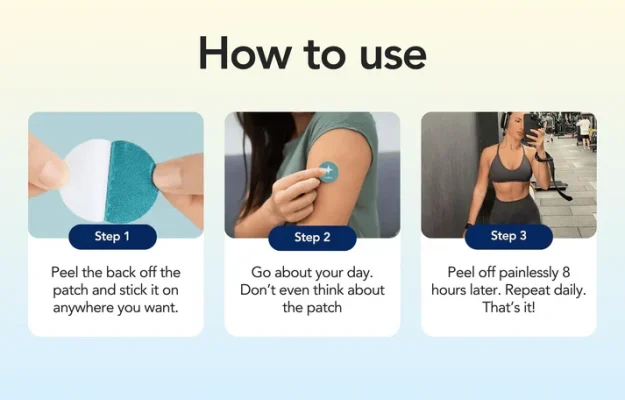
GLP 1 patches are adhesive patches marketed as a way to deliver ingredients associated with GLP-1 activity through the skin.
GLP-1 stands for glucagon-like peptide-1, a naturally occurring hormone involved in appetite regulation, insulin secretion, digestion, and blood-glucose control.
Prescription GLP-1 medicines work by activating GLP-1 receptors. Depending on the medicine, this can influence appetite, food intake, stomach emptying, and glucose metabolism.
The important distinction is that a product being advertised as a “GLP-1 patch” does not automatically mean that it contains an approved GLP-1 receptor agonist or that it delivers an effective amount of such a medicine through the skin.
How Do GLP-1 Medicines Work?
GLP-1 receptor agonists mimic or activate pathways associated with the natural GLP-1 hormone.
These medicines can influence several physiological processes.
Appetite Regulation
GLP-1 signaling can affect areas of the brain involved in appetite and food intake. This is one reason approved GLP-1 medicines can help some patients consume fewer calories.
Blood Glucose
GLP-1 receptor activation can increase glucose-dependent insulin secretion and reduce glucagon secretion when blood glucose is elevated.
This makes the GLP-1 pathway particularly important in the management of certain metabolic conditions.
Digestion
GLP-1 activity can also influence gastric emptying. Slower movement of food through the stomach may contribute to increased fullness after eating.
These effects help explain why established GLP-1 medicines can have both metabolic and appetite-related effects.
Do GLP 1 Patches Contain GLP-1 Medication?
This is one of the most important questions to ask.
A patch advertised using GLP-1 terminology may not contain the same active ingredient found in an approved GLP-1 medicine.
Some products marketed online may contain vitamins, botanical ingredients, peptides, or other compounds rather than an approved GLP-1 receptor agonist.
Consumers should therefore examine the actual ingredient information rather than assuming that the product has the same pharmacological action as a prescription medication.
Can GLP-1 Be Delivered Through the Skin?
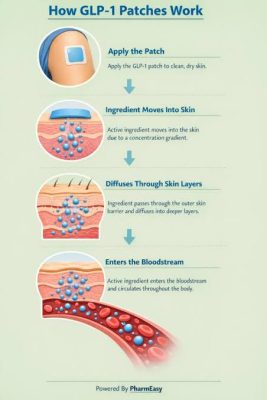
Transdermal drug delivery can be useful for certain medications, but delivering a large or complex peptide through intact skin presents significant pharmaceutical challenges.
The skin is an effective protective barrier. Many molecules do not readily cross it in amounts sufficient to produce a predictable systemic effect.
Peptide medicines can be particularly challenging because of their molecular characteristics and susceptibility to degradation.
A patch therefore cannot automatically be assumed to provide the same exposure as an injectable or orally administered medicine.
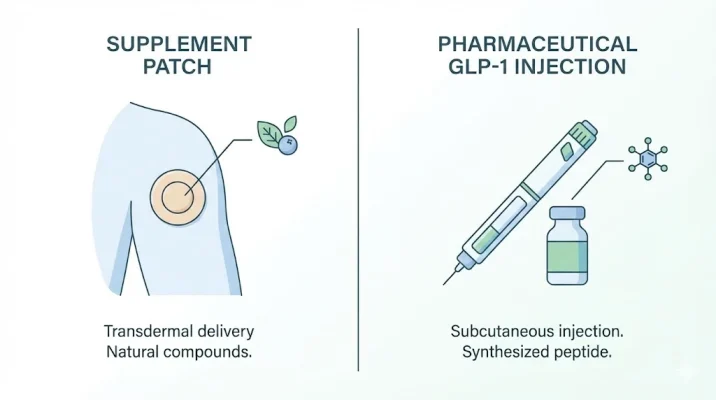
GLP 1 Patches vs Injectable GLP-1 Medicines
There is an important difference between a marketed patch and an approved GLP-1 medication.
Prescription GLP-1 medicines undergo pharmaceutical development, manufacturing controls, clinical evaluation, and regulatory review for their intended uses.
A commercially marketed patch may not have undergone the same level of evidence or regulatory assessment.
This distinction matters when evaluating claims about weight loss, blood glucose, appetite suppression, or metabolic benefits.
GLP 1 Patches for Weight Loss
Weight loss is one of the main reasons people search for GLP 1 patches.
The popularity of GLP-1 medicines has created substantial interest in alternative delivery methods that appear easier or more convenient.
However, marketing claims should be separated from clinical evidence.
Effective weight-management treatment involves more than appetite suppression. A comprehensive approach can include nutrition, physical activity, sleep, behavioral factors, metabolic health, and appropriate medical treatment when indicated.
Consumers should be cautious about any patch claiming to produce dramatic weight loss without clearly explaining its active ingredients and supporting clinical evidence.
Potential Benefits Claimed by GLP 1 Patches
Online products may make claims involving:
- Appetite control
- Weight loss
- Blood sugar management
- Increased satiety
- Metabolic support
- Reduced cravings
- Improved energy
The presence of these claims does not establish that the patch can produce those effects.
Before evaluating a product, consumers should ask whether there is reliable clinical evidence for the specific product, rather than evidence for GLP-1 medicines generally.
GLP 1 Patches Side Effects
Side effects depend on the actual ingredients contained in a patch.
If a product does not contain a pharmacologically active GLP-1 receptor agonist, its effects may be very different from those associated with prescription GLP-1 medicines.
Potential problems with adhesive patches can include:
- Skin irritation
- Redness
- Itching
- Contact dermatitis
- Allergic reactions
- Discomfort at the application site
If a product contains active pharmaceutical ingredients, additional systemic adverse effects may be possible.
This is another reason to establish exactly what a product contains before using it.
Side Effects Associated With GLP-1 Medicines
Approved GLP-1 receptor agonists have known safety profiles that differ according to the specific medicine.
Common gastrointestinal effects can include:
- Nausea
- Vomiting
- Diarrhea
- Constipation
- Abdominal discomfort
Some patients experience more significant adverse reactions.
The safety information for each prescription medicine should therefore be reviewed individually with a healthcare professional.
GLP-1 Medicines and Dehydration
Gastrointestinal symptoms such as vomiting and diarrhea can contribute to fluid loss.
People taking prescription GLP-1 medicines should follow medical advice regarding hydration and should contact a healthcare professional if severe or persistent symptoms occur.
A product marketed as a patch should not be assumed to have the same safety profile simply because it uses the term “GLP-1.”
GLP-1 and Blood Sugar
The GLP-1 pathway has an important role in glucose regulation.
For people with diabetes or other metabolic conditions, blood glucose management requires appropriate medical assessment.
Using an unverified product in place of prescribed medication can create unnecessary risks, particularly if blood glucose is not being adequately controlled.
Anyone taking medication for diabetes should discuss significant treatment changes with their healthcare provider.
GLP 1 Patches and Prescription Medicines
People sometimes search for patches because they prefer not to use injections.
That preference is understandable, but convenience should not replace evidence.
When a medication is prescribed for weight management or diabetes, the healthcare professional can consider available treatment options based on:
- Diagnosis
- Medical history
- Other medications
- Weight and metabolic factors
- Treatment goals
- Contraindications
- Potential adverse effects
- Monitoring requirements
A different formulation may sometimes be appropriate, but that decision should be based on an individual’s medical needs.
How to Evaluate a GLP 1 Patch
Anyone researching these products should look beyond advertising language.
Check the Active Ingredients
Determine exactly what the patch contains.
A vague statement such as “GLP-1 support” does not identify a pharmacologically active ingredient.
Look for Evidence
Look for clinical evidence involving the actual product and formulation.
Research involving an injectable GLP-1 medicine should not automatically be presented as evidence that a particular patch works in the same way.
Check Regulatory Information
Consumers should determine whether the product is legally authorized for its claimed medical purpose in their country.
Consider Manufacturing Quality
Products purchased outside regulated pharmaceutical supply chains may have uncertainties regarding identity, concentration, contamination, or stability.
GLP 1 Patches vs GLP-1 Injections
The convenience of a patch is one of its biggest marketing advantages.
An adhesive patch may appear easier than regular injections. However, the important question is whether the active ingredient can actually cross the skin in a predictable and therapeutically meaningful amount.
Approved injectable GLP-1 medicines have established delivery systems and dosing information based on pharmaceutical development.
This does not mean every injection is appropriate for every patient, but it does highlight the importance of distinguishing an established medication from an unverified delivery product.
Are GLP 1 Patches FDA Approved?
Regulatory status depends on the specific product and jurisdiction.
Consumers should not assume that a patch is approved simply because the advertisement uses medical terminology or references an approved GLP-1 medicine.
Regulatory agencies evaluate specific products, ingredients, formulations, manufacturing processes, and intended uses.
The approval of one GLP-1 medication does not automatically establish approval for a different patch containing different ingredients or using a different delivery system.
GLP 1 Patches and Online Marketing
Online marketing can make it difficult to distinguish established medical treatments from wellness products.
Be cautious when a product:
- Promises rapid or effortless weight loss
- Claims to work exactly like prescription GLP-1 medicines
- Does not clearly identify active ingredients
- Uses dramatic before-and-after claims
- Provides little information about manufacturing
- Claims to have no side effects
- Suggests that medical supervision is unnecessary
A professional consultation is particularly important when weight loss treatment is being considered for someone with diabetes, cardiovascular disease, or other chronic conditions.
Are GLP 1 Patches Worth It?
The answer depends on the specific product and the evidence supporting it.
A patch with unclear ingredients and no reliable clinical evidence should not be treated as equivalent to an approved GLP-1 medicine.
For people interested in GLP-1 treatment, the most useful starting point is usually a discussion with a qualified healthcare professional.
That allows the individual’s health history, treatment goals, medications, and risk factors to be considered before choosing an appropriate approach.
GLP-1 Treatment and Lifestyle Changes
Medication is only one component of comprehensive weight management.
Long-term results can also involve:
- Balanced nutrition
- Regular physical activity
- Adequate sleep
- Stress management
- Behavioral support
- Regular medical follow-up
People using medically prescribed weight-management treatments may benefit from combining medication with sustainable lifestyle strategies.
Questions to Ask Before Using a GLP 1 Patch
Before purchasing or using a product, consider asking:
- What is the exact active ingredient?
- Is the ingredient clinically proven for this delivery method?
- Has the specific product been studied in humans?
- Is it authorized for its advertised use?
- Who manufactures it?
- How is quality controlled?
- What side effects are associated with the ingredients?
- Could it interact with other medicines?
- Should a healthcare professional supervise its use?
These questions can help separate evidence-based treatment from unsupported marketing.
Frequently Asked Questions
What are GLP 1 patches?
GLP 1 patches are products marketed as adhesive patches intended to provide GLP-1-related effects or ingredients through the skin. Their actual ingredients and evidence can vary.
Do GLP 1 patches work like injections?
Not necessarily. A patch must successfully deliver an active ingredient through the skin at an effective and predictable level. Marketing a product as a GLP-1 patch does not establish equivalence to an approved injectable medicine.
Are GLP 1 patches the same as GLP-1 medications?
No. An approved GLP-1 medication is a specific pharmaceutical product with established ingredients, formulation, manufacturing standards, evidence, and regulatory status.
Can GLP 1 patches help with weight loss?
Some products are marketed for weight loss, but effectiveness depends on the specific ingredients and delivery system. Consumers should look for evidence involving the actual product rather than assuming that evidence for prescription GLP-1 medicines applies to every patch.
Are GLP 1 patches safe?
Safety depends on the ingredients, manufacturing quality, delivery system, and individual health circumstances. Skin irritation may occur with adhesive products, while active pharmaceutical ingredients can have additional risks.
Do GLP 1 patches contain semaglutide?
Not every product marketed as a GLP-1 patch contains semaglutide. The ingredient list should be checked carefully, and consumers should not assume that a product contains an approved GLP-1 medication.
Do GLP 1 patches contain tirzepatide?
Products marketed as GLP-1 patches may contain different ingredients, and the term itself does not establish that tirzepatide is present. Consumers should verify the specific product and its regulatory status.
Should I use a GLP 1 patch instead of prescribed medication?
Do not replace prescribed medication with an unverified product without discussing the change with your healthcare professional.
Final Thoughts on GLP 1 Patches
GLP 1 patches have attracted attention because they appear to offer a convenient alternative to injectable weight-management medicines. However, convenience and marketing claims should not be confused with established clinical evidence.
The GLP-1 pathway is well studied, but that does not mean every product using “GLP-1” terminology has the same ingredients, effectiveness, delivery characteristics, or regulatory status.
Anyone considering GLP-1 treatment should focus on the specific active ingredient, evidence, regulatory information, manufacturing quality, and potential risks. A qualified healthcare professional can help determine whether an established treatment is appropriate based on individual circumstances.
glp 1 patches,
glp1 patch,
berberine patches,
glp-1 patch,
kind patches review,
do glp 1 patches work,
glp 1 patches reviews,
glp-1 patches,
kind patches reviews,
weight loss patch,
glp 1 patch,
glp1 patches,
glp1 supplement.
